

 Jennifer Tripucka
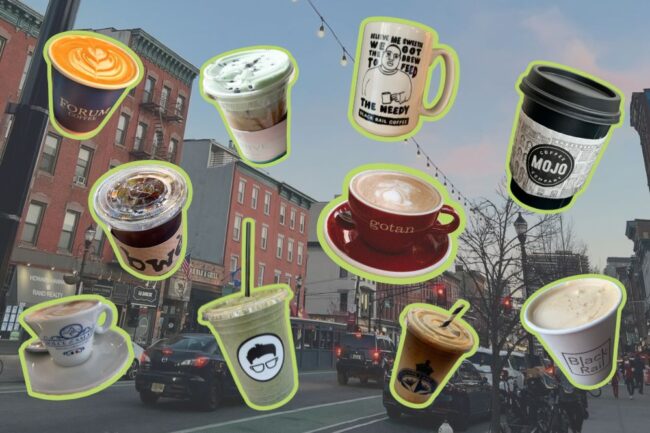
Upon driving into uptown Hoboken from the Willow Avenue Bridge with your windows down, the welcome scent of roasted coffee permeates the area. Walking a few blocks around town, you’re likely to pass at least one — or four — coffee shops on any given stroll. For some, it’s becoming a running joke: Does Hoboken really need another coffee shop? Online comment sections and forums often are met with eye rolls and grumbles whenever a new coffee shop is announced. In just the last year and a half, over 20 coffee shops have announced their openings or plans to open in the Mile Square. But what many may not know is that beneath this fatigue lies a bigger story of history, community, and growth. With almost 40 coffee shops in one square mile, Hoboken is one of the most coffee-dense cities in New Jersey.
Love or hate the sheer number of coffee shops, delving into this trend is something we’ve been intrigued by for a while, especially given that the rate of coffee shop openings is not slowing down anytime soon, with 10+ coming in the next few months. So we sat down with several coffee shop owners, residents, City officials, as well as some Hudson County developers, to discuss this phenomenon.
Coffee’s History in Hoboken
From a historical perspective, the prevalence of coffee shops shouldn’t be a surprise: Hoboken was once home to Maxwell Coffee House and the Lipton Tea Factory, among others — a true coffee town. Maxwell opened its plant in Hoboken in the 1930s, later closing in the ‘90s and moving its production facility to Florida. The waterfront location in Hoboken later turned into the present-day Maxwell Place condos.
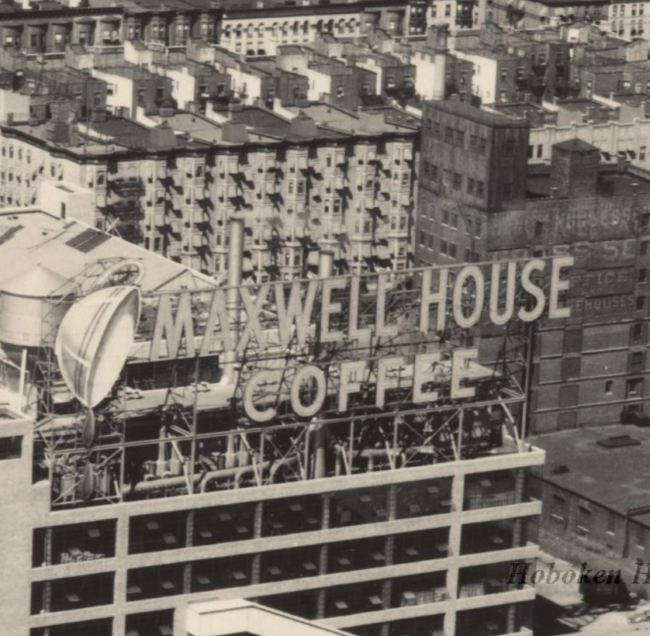
Photo Credit: Hoboken Historical Museum


Read More: Best Coffee Shops to WFH in Hoboken + Jersey City, Based on Your Neighborhood
Similarly, the Lipton Tea Warehouse opened in Hoboken in 1913, and for almost a century, produced its tea uptown where the now re-imagined Hudson Tea Building condos are. And, in a complete full-circle moment, the Lipton Tea HQ has moved back to Hoboken as of the past year, along with its former owner and corporate giant, Unilever.

Coffee by the Numbers
Over the last decade, the number of coffee shops has increased exponentially. In 2021, Patch reported that there were over 30 coffee shops in the Mile Square. That number has only increased, and rapidly at that, to almost 40 coffee shops.
This list of coffee shops in Hoboken represents those that are locally owned. The number does not include Starbucks or Dunkin Donuts franchises, which would increase the number by five.
In 2024-2025 so far, a staggering 22 coffee shops have opened or announced plans to open in town.
With over 57,000 residents per the 2023 Census and housing Stevens Tech students and faculty within its bounds, Hoboken ranks as one of the most densely populated cities in the United States. From this lens, that equates to roughly one coffee shop per 3.75 blocks.
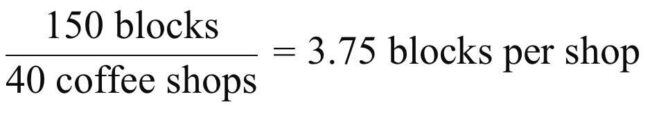
In Hoboken, the high population density, concentration of young professionals, and a supportive local economy also come into play. Combining a walk score of 99 and its community feel, small town vibe, it’s seemingly an optimal setting for entrepreneurial building.
The Coffee Shop Phenomenon
Sociologists have long referred to cafes as “third places” via the “Coffee Shop Phenomenon,” with the space between home and work where connection happens. Think Friends, ahead of its time.
For many Hobokenites, coffee shops have stepped into that role, especially post-2020, as work-from-home culture exploded. And this doesn’t seem to be a coincidence. Many coffee shops have created co-working-style spaces that invite residents to set up shop for the day, enjoying breakfast and/or lunch while sipping a latte and working remotely. This is a major reason the coffee shop scene thrives in a post-pandemic world.
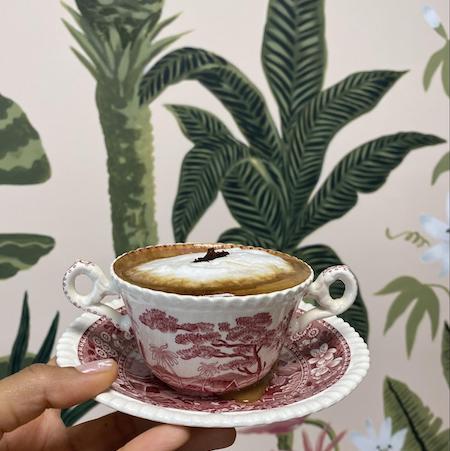
^ Cafe Vista
Another factor: the term “coffee shop” doesn’t capture what these places have become.
In Hoboken, the term is a catch-all. Alessio’s? Sure, technically a coffee shop, but also a full-blown pizza and Italian cafe/restaurant, open till 9PM. The Hive? Coffee, yes, but also cinnamon rolls, a kids’ play space, and a community hub. Gotan? Great coffee, but equally known for being a two-floor telework haven. Black Rail? Known for its delicious sandwiches. Even Boomerang Bites serves coffee, but it’s really more of a bakery in disguise.
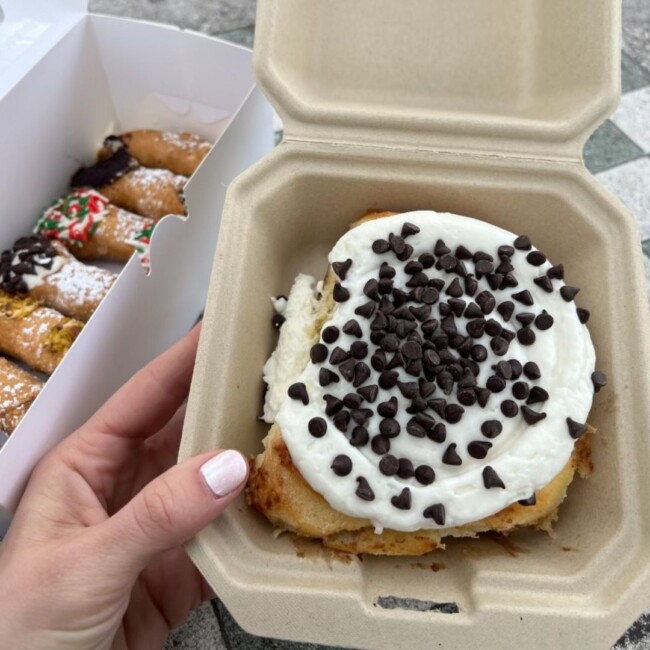
^ cinnamon roll specialty from The Hive
And these spots aren’t just serving up black coffee anymore: they’re neighborhood gathering spaces with unique drinks, baked goods, and at times, food, and sometimes encourage an ambiance just as diverse.
The Community Weighs In
While the voices of social media and forums may be loud, it doesn’t always mean they’re unanimous in their coffee sentiments.
On one hand, many feel that coffee shops bring community and make a neighborhood feel cozy and intimate.
“People complain about it being another coffee shop, yet they also complain about corporate chains coming in and ask, ‘where are the mom and pop shops?’ while still badgering these small business owners [starting their coffee shops in town] online,” shared a BNR Hoboken resident who wished to remain anonymous for this piece.
Others are alarmed at the rate of businesses closing, and the gentrification taking place, with a variety of long-standing local businesses closing and some being replaced by chains, and the worry of pushing out old businesses.
“I’m a firm believer in change. It’s not so welcome by the BNR crowd. I’m different,” Frank Palmisano, owner of Il Tavolo di Palmisano and lifelong Hoboken resident, shared with The Hoboken Girl.
Another BNR who wished to remain anonymous said to The Hoboken Girl, “The gentrification isn’t the coffee shops, it’s the rent being so high that most mom and pop shops and BNR businesses can’t afford to stay and get pushed out. I don’t want Abercrombie and Fitch — I want my damn ribs and bowl of pickles from Arthur’s.”
Others state this evolution has been in progress for the last few decades, noting it’s nothing new.
“I don’t think it’s making gentrification any worse; Hoboken has been heavily gentrified for a long time. It’s just too many of one thing,” stated Madeleine Perkins, another born-and-raised Hoboken resident.
Margarita Garcia, a Hoboken BNR and owner of local business Little Linguists shared, “There hasn’t been a small business that has closed simply because a new coffee shop has bought them out. This is a false equivalency. The business first closes because it can’t compete with the sky-high pricing, and then, when the space is up for grabs, a new business venture will rent it out.”
Still, some feel that these newer shops are unwelcoming to longtime residents, but others disagree.
Margarita said, “There is nothing stopping old Hoboken folks from walking into a coffee shop, grabbing a cup of joe and sitting back and enjoying themselves. I think the line is so divided between old Hoboken and the new that people really fail to see that these businesses are for all.” Margarita explained that her parents, both Hoboken residents since the 1960s, “love to go to The Hive and Dolce & Salato and have a coffee, read the paper. They don’t see Hoboken as Old vs New. They see these new businesses as exciting opportunities to try something different. If Old Hoboken change[d] their mindset, they’d learn that a small business that is selling community isn’t out to hurt anyone. It is, in fact, trying to bring us all closer.”
On Staying True to Local
Many residents we surveyed shared that they don’t mind the number of coffee shops, but they just don’t want national chains, which is hard to control unless the building’s developer is focused on building community over filling retail locations.
“Small coffee shops owned by local residents…is one thing. National chains poised to take business away…should have no place in Hoboken,” Anna Novosyolok answered, as a 15-year Hoboken resident.
And case in point: The Hive founders and residents Kristin Karotkin and Catherine Willhoit opened their first coffee shop location in 2020 with a simple mission: to create a cozy, family-friendly spot in a town overflowing with coffee but short on connection. It worked. Their cinnamon rolls became a local legend, they opened a second Jersey City location, and the rest is Hoboken folklore.
“If shops are coming into a crowded market and offering something new and different, then there is space for sure… but if you’re just trying to do the same thing that is already being done on every other block, it feels boring and unexciting for the community,” they shared with The Hoboken Girl. And based on the eye rolls online, Hoboken residents can spot the difference.
On Sticking Out in a Crowded Coffee Market
While the naysayers think too many coffee shops are a bad thing, some shop owners beg to differ. There have been several coffee shops that have found so much Mile Square success that they’ve opened multiple locations, just like The Hive.
bwè kafe and Choc O Pain, two longtime Hoboken coffee shops that opened well before the 2020s coffee boom, are longstanding neighborhood cornerstones, having opened two locations in Hoboken and also in downtown Jersey City. Mojo Coffee has also followed suit.
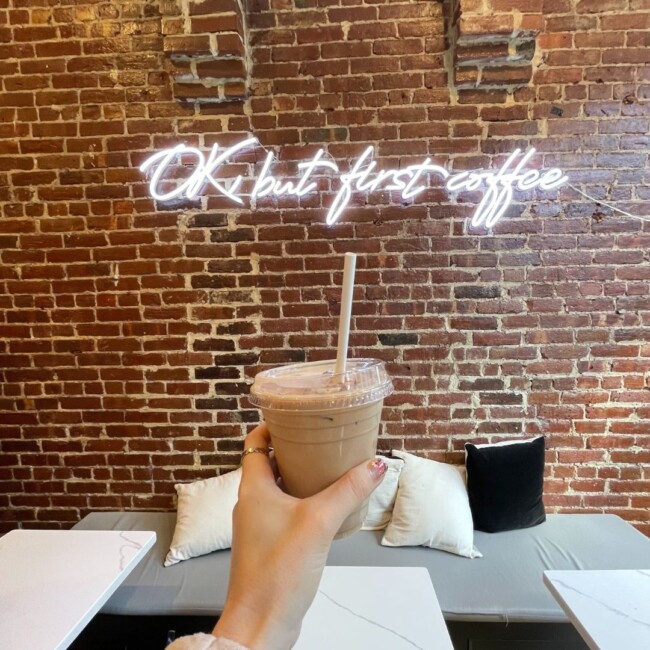
^ Mojo’s Willow Avenue location
Another Hoboken coffee shop owner with one small location in the Mile Square, who wished to remain anonymous, shared with The Hoboken Girl, “I’ve thought about opening a restaurant. In fact, that was the first thing I thought about when getting into this business. But honestly, no one wants to open [a restaurant] these days. The cost of food, the expenses. It’s so much harder.” They went on to note that even serving food at your coffee establishment is, and we quote, “a drag [along with any alcoholic beverages].”
Coffee shops outpace restaurants because of the lower bar to entry: it’s less expensive and easier to open a coffee shop.
“A liquor license is expensive and hard to come by,” the would-be restaurant owner explained, “So that’s out. In general, coffee shops are easier to run, hands down. The hours are better. The feedback is easier to manage, along with the drink menu. You can outsource baked goods and highlight local businesses that provide fun products [ex: desserts, greeting cards, etc] to sell within that people will travel for. It’s really a win-win.”
Some local coffee shop lovers feel that the location of a shop, instead of its “product draw,” guides their coffee consumption and frequenting of local spots.
“I’m all about new coffee shops coming to the neighborhood, but as much as people want a ‘cool’ coffee shop, they may live across town from one that draws a crowd, and it’s not feasible to get there daily depending on your commute,” Ken Carroll of Zillow Rentals explained. This phenomenon, he mentioned, is what “location” is all about, and why coffee shops are so prevalent.
“It’s just not in the cards to walk 5+ blocks for coffee, unless it has a really insane draw of pastries, drinks, or a welcoming space with great WiFi,” he reflected. And that, it seems, is exactly where The Hive got it right.
Part of the draw: Coffee shops today serve so much more than coffee. Non-dairy milks, seasonal lattes, cold brews on tap, and for the matcha loyalists, individual takes on this, too. Plus, the rise of house-made pastries, specialty teas, and rotating local food pop-ups and collaborations has put many spots on the map as destinations.
Plus, Hobokenites aren’t settling for just any cup of coffee anymore. With residents more particular and knowledgeable about coffee beans, brewing methods, and drink quality, with prices sky-high, an “average” latte isn’t enough staying power, unless it’s a longstanding institution with a loyal community.
That notion, however, can be debunked when talking to certain local residents like Frank Palmisano and Margarita Garcia, who are both supportive of coffee shop culture but not sold on it. “Not all of us need a $9 latte, some of us are happy with convenience or liquor store coffee for $3 and a chat with our neighbors,” Frank said.
“We all enjoy a cup, so I don’t think that’s a reason to say Hoboken is losing its identity,” Margarita added. “I think [longtime residents] are scared of a new sign that comes up and automatically assume[s] its not for them. Again, with some intermixing of groups and perhaps Old Hoboken taking a step into their unknown, they’d understand that they are coffee people. We all are.”
On the Developer Front
While one might argue Hoboken’s coffee shop boom is simply organic growth, others will tell you: follow the real estate. Developers, after all, tend to have a strong say in which businesses fill their new ground-floor retail, and more often than not, coffee shops are at the top of their wishlist.
“Coffee shops make neighborhoods welcoming and safe. Even if you don’t enter the shop, seeing people gives you a feeling of safety and companionship,” shared Paul Silverman, a developer in the Hudson County area since the 1980s.
When choosing retail tenants for his buildings, he noted, “We look for the most enthusiastic entrepreneurs,” noting that he has a preference for those who are filled with passion and energy around their business, likely translating into long-term success.
And as new construction takes root in various areas, coffee shops have become anchors of community in many ways, welcomed or not.
Similarly, Marc Kushner of KRE Group shared, “We always try to curate a retail mix that makes sense for the neighborhood. [Coffee shops] are a staple of community life. They’re places where you can gather with friends and neighbors for coffee, food, and conversation.”
It also doesn’t hurt that coffee shops tend to require less plumbing than restaurants, and significantly fewer zoning headaches than a daycare or hardware store. That’s not to say every new shop is just part of the real estate machine, as most are genuinely carving out community space.
Kushner noted it’s often something that tends to make residents happy, and explained it contributes a sense of vibrancy to a neighborhood. KRE Group currently houses four coffee shops, including The Café (presented by Almost Home), Whealth Kitchen, and B18 Coffee Kitchen in its buildings as tenants.
Nonetheless, any residents feel unheard when it comes to coffee shops or other prevalent business categories being the only option for an open retail space. “Closing business[es] that are old school Hoboken and opening a nail salon or a coffee shop is like comedy at this point,” another resident shared with us.
So, What, if Not Coffee, Should Come to Hoboken?
We asked The Hoboken Girl Facebook group of 45,000 residents to weigh in with their thoughts about the future of Hoboken’s retail scene in our community survey, and received a wide variety of answers. Here are a few answers that were most common or noteworthy:
“Things to do besides eating and drinking. A community pool, maybe a Lifetime Fitness.” ~ Shannon Lovetere
“A craft store. Like Michael’s but on a pop-up/permanent level.” ~ Summer Bolton
“Men’s clothing…like a Gap or Banana Republic.” ~ August Galifi
“Locally sourced farm-to-table restaurant, butcher, fishmonger, specialty grocery store, quality ramen shop.” ~ Anna Novosyolok
“Yoga studio…better Thai food…more date night restaurants with live music…market with prepared foods for families.” ~ Elissa Aaronson
“More authentic diners.” ~ Nicole Picinich
“I’d like to see a toy store in town [that’ll] never happen, Amazon destroyed that.” ~ Frank Palmisano
The Verdict
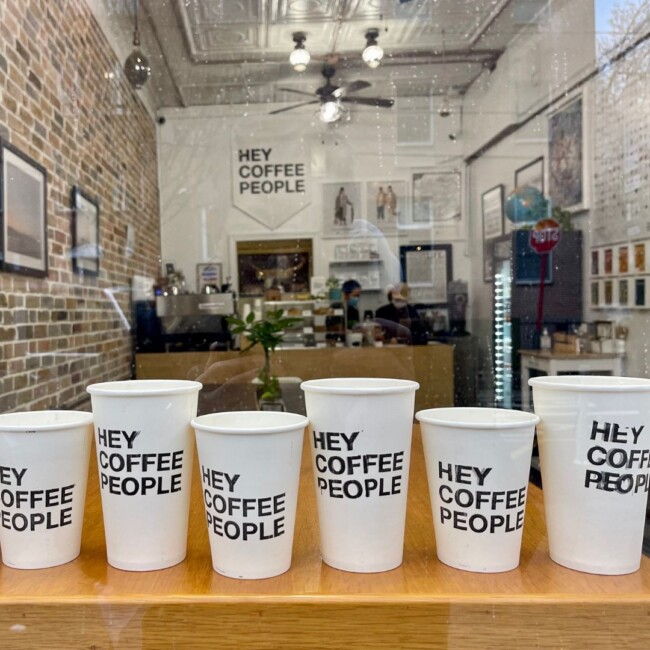
^ Hey Coffee People
While many feel that 40+ coffee shops are, frankly, too many in a square-mile city, it’s not the entire story. Behind the cinnamon rolls and latte art is a deeper story about how neighborhood staples like these shape urban life. Hoboken’s dense population, young-skewed demo, and supportive economic environment have collectively created a thriving coffee shop scene.
Even though it might feel like Hoboken has a coffee shop on every corner, it’s worth asking, “Are the coffee shops and cafes really all the same?”
See More: A Guide to Montclair’s Best Coffee Shops
From pizza to pastries to work-friendly WiFi, the so-called coffee shop has evolved and continued to enhance the Mile Square’s charm. So love them or hate them, many coffee shops have cemented themselves as more than caffeine hubs: they’re economic engines, social anchors, and, in many ways, a reflection of Hoboken’s ever-evolving identity.